A transmission rebuild may be the right solution when slipping, delayed shifts, or repeated repairs affect your vehicle’s performance. Still, not every issue requires a full rebuild. Low fluid levels, a faulty sensor, or damaged wiring may cause some problems.
Dive into our blog to learn about common transmission problems, warning signs of internal damage, and factors to consider before choosing a rebuild.
What Is a Transmission Rebuild?
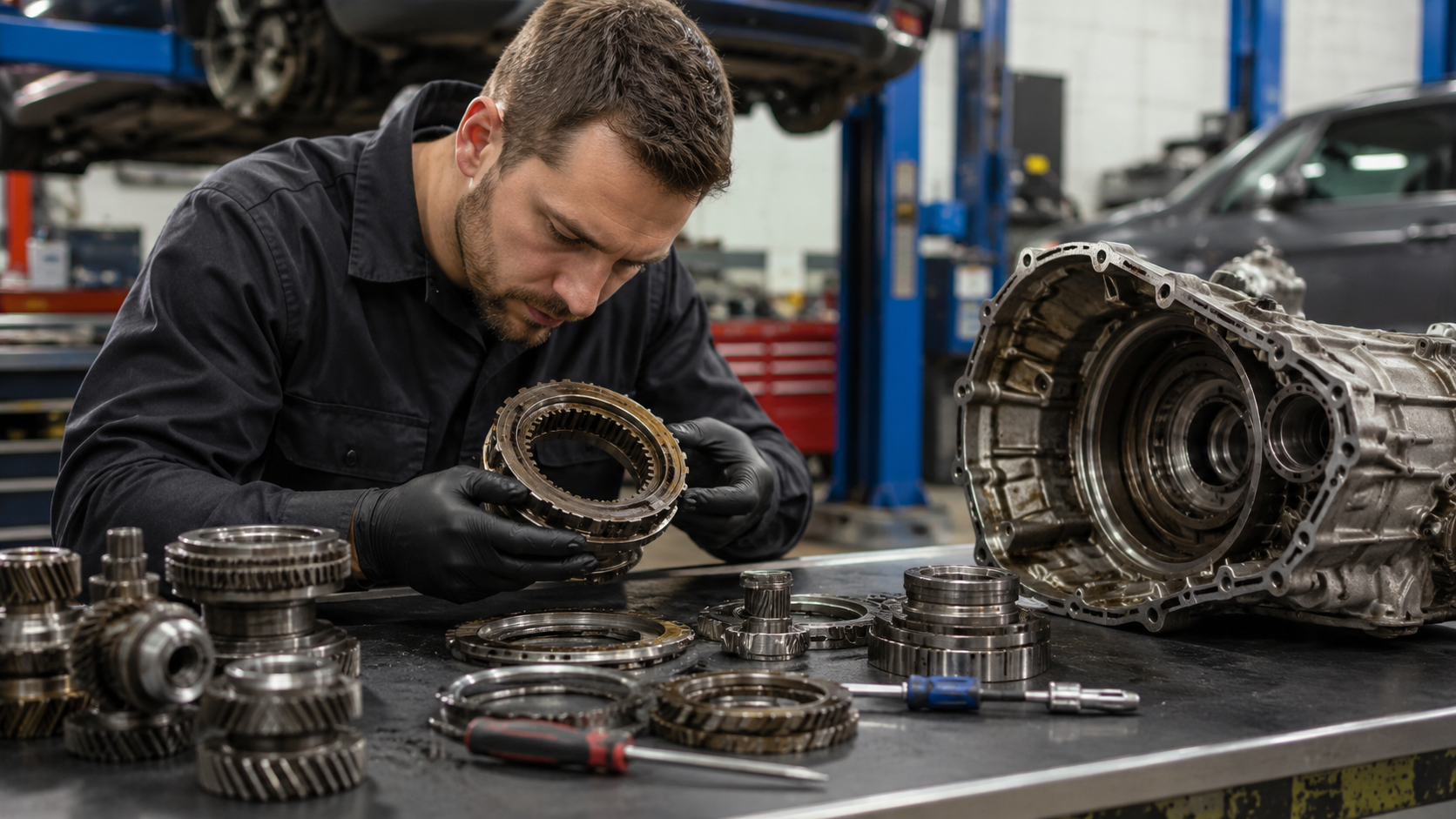
A transmission rebuild restores the existing transmission by replacing worn or damaged internal parts. The transmission is removed, taken apart, cleaned, and inspected. Damaged components are replaced, reusable parts are prepared for continued use, and the unit is reassembled.
A typical rebuild may include:
- Transmission removal and disassembly
- Internal inspection and cleaning
- Replacement of worn parts
- New seals and gaskets
- Reassembly and reinstallation
- Operational testing
Common Transmission Problems Drivers Notice
Transmission trouble often begins with small changes in the way a vehicle drives. Shifting may feel slower, rougher, or less predictable.
Common problems include:
- Delayed gear engagement
- Slipping gears
- Hard or rough shifting
- Grinding, whining, or humming noises
- Transmission fluid leaks
- Burning odors
- Shaking or vibration
- Weak acceleration
- Trouble moving in reverse
- Warning lights
These signs do not always confirm that a rebuild is needed. A professional inspection is needed before major work begins.
Warning Signs a Transmission Rebuild May Be Needed
Some transmission problems can be corrected with a smaller repair. Others suggest that several internal parts may be worn or damaged.
The Transmission Slips Often
Transmission slipping may feel like the vehicle changes gears without warning or struggles to stay in gear. The engine speed may rise, but the vehicle does not accelerate as expected.
Low fluid can sometimes cause slipping. Ongoing slipping may point to worn clutches, bands, gears, or other internal parts. Because slipping can affect vehicle control, it should be checked promptly.
Shifting Becomes Rough or Delayed
A healthy transmission should shift gears smoothly—hard shifts, sudden jerking, or long delays before the vehicle moves may signal a developing issue.
These concerns may stem from fluid issues, control problems, or internal damage. When several parts are worn, rebuilding may offer a more complete solution than replacing one part at a time.
The Transmission Makes Unusual Noises
Grinding, whining, humming, or clunking sounds may mean that something inside the transmission is not working correctly. Noise alone cannot confirm the need for a rebuild, but noise combined with slipping or rough shifts may point to serious wear.
The Fluid Is Burnt or Contains Debris
Transmission fluid helps reduce heat and protect moving parts. Dark fluid, a burnt odor, or visible metal debris may indicate overheating or internal wear.
Repairs Keep Adding Up
Repeated problems may show that the unit has wider internal wear. Replacing one part at a time can become costly when new issues keep arising. A rebuild allows the entire transmission to be opened and inspected.
The Vehicle Will Not Move Reliably
A vehicle that will not engage in drive or reverse may have a serious transmission problem. Electrical faults can cause similar symptoms, so a full diagnosis is still needed.
When a Smaller Repair May Be Enough
Not every warning sign requires complete transmission rebuilding. A smaller repair may be enough when the issue involves:
- Low transmission fluid
- A minor leak
- A faulty sensor
- Damaged wiring
- A failed solenoid
- A worn mount
- A cooling line problem
- A control module issue
Accurate testing matters. Rebuilding before confirming internal damage may lead to unnecessary work. Delaying service when serious damage is present may also allow the problem to spread.
Repair, Rebuild, or Replace?
The right choice depends on the damage, the vehicle’s condition, and your ownership plans.
Consider the Damage
A smaller repair may make sense when the problem is limited to one accessible part. A rebuild may be more suitable when several internal components are worn or damaged.
Review the Vehicle’s Condition
A rebuild may make sense when the rest of the vehicle remains in good condition.
A vehicle with major engine, electrical, suspension, or body problems may require a broader cost comparison. Consider the cost of the transmission work along with other repairs the vehicle may need soon.
Think About Long-Term Use
Consider the vehicle’s mileage, value, maintenance history, and expected future use.
Rebuilding may be a practical choice for a vehicle you know and plan to keep. It also helps you avoid the added cost and uncertainty of buying another vehicle.
Ask About Warranty Coverage
A written warranty can provide added confidence after major transmission work. Ask how long it lasts, what is covered, and whether any conditions apply.
You should also confirm whether the estimate includes labor, replacement parts, removal, reinstallation, fluid, testing, and related services.
Benefits of Choosing a Transmission Rebuild
When internal damage is confirmed, rebuilding may help:
- Restore smoother shifting
- Improve gear engagement
- Support more predictable acceleration
- Extend transmission life
- Reduce repeated repair concerns
- Preserve a vehicle you already own
- Improve daily driving comfort
- Provide an alternative to vehicle replacement
A rebuild focuses on the condition of the existing transmission. It allows worn parts to be identified and replaced while suitable components remain in use.
The results depend on the condition of the transmission, the parts used, and the care taken during rebuilding and installation.
What to Expect During the Rebuilding Process
Vehicle Evaluation
The process begins with a review of the symptoms, vehicle history, and current condition. Diagnostic codes may be checked, and the fluid may be inspected.
The technician may also evaluate how the vehicle shifts, accelerates, and responds in drive and reverse.
Transmission Removal and Inspection
When rebuilding is recommended, the transmission is removed and taken apart. Internal parts are cleaned and inspected to identify worn or damaged components.
Removal may involve disconnecting transmission mounts, cooling lines, electrical connectors, sensors, and related drivetrain parts.
Rebuilding and Reassembly
Necessary components are replaced, and the transmission is rebuilt in accordance with its design. Seals, gaskets, and other service parts may also be replaced.
Qualifying transmission rebuilds from Elite Engine & Transmission Rebuilders include a free torque converter. Eligibility can be discussed during the consultation.
Reinstallation and Testing
Once rebuilding is complete, the transmission is reinstalled and connected to related systems. Operational checks and shifting evaluations are then completed.
Testing helps confirm that the vehicle engages properly, changes gears smoothly, and responds as expected before it is returned to the customer.
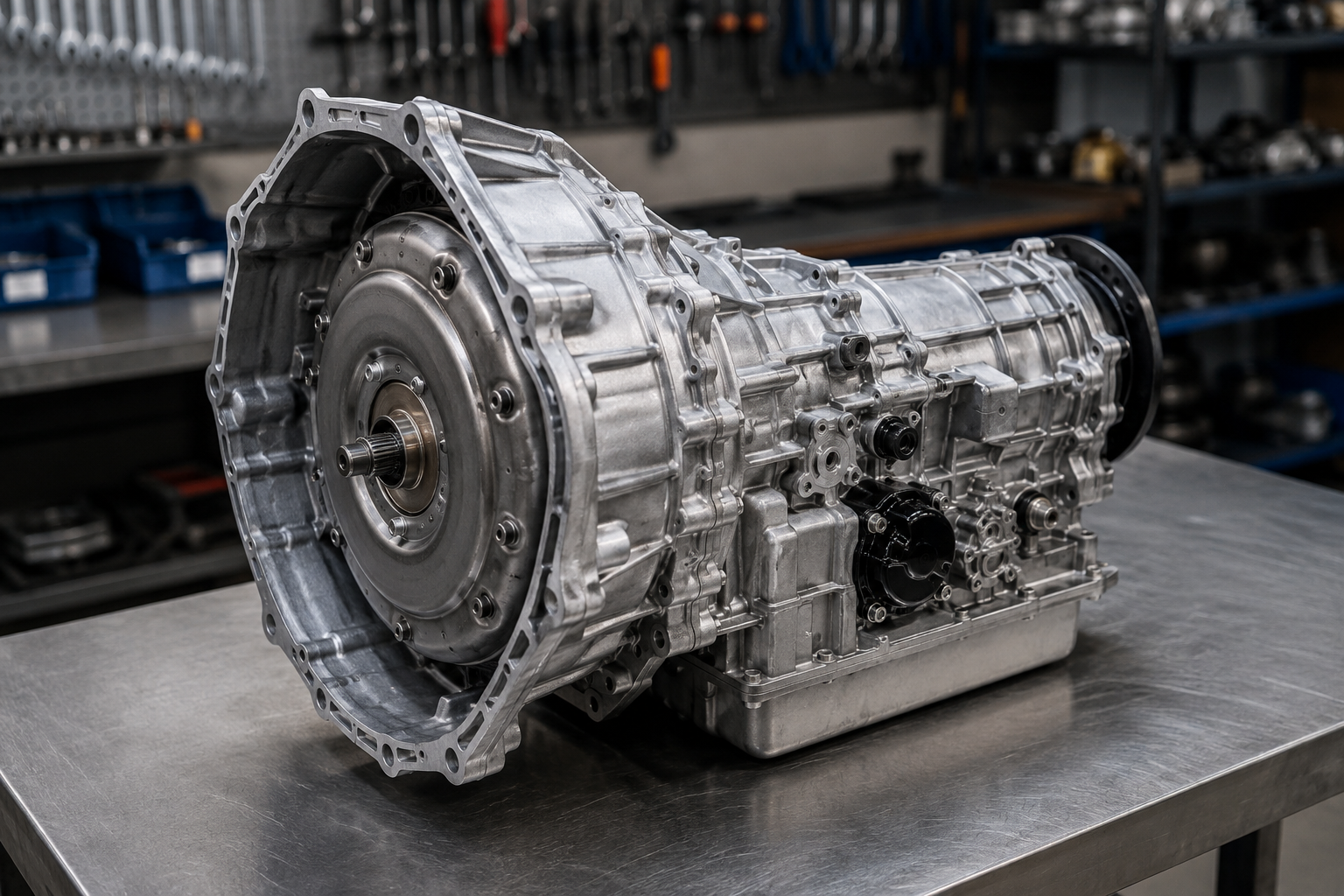
View our services to learn more about transmission rebuilding, removal and reinstallation, testing, and available vehicle pickup and delivery.
Questions to Ask Before Approving a Rebuild
Consider asking:
- What caused the problem?
- Why is a rebuild recommended?
- Which parts are included?
- Does the estimate include removal and reinstallation?
- Is the torque converter included?
- What testing is completed afterward?
- What warranty is provided?
- Is pickup and delivery available?
Clear answers help you understand the scope of the work and compare your options more accurately.
Frequently Asked Questions
How Long Can a Rebuilt Transmission Last?
Service life depends on workmanship, parts, maintenance, driving habits, heat, and related systems.
Following the recommended maintenance schedule and addressing leaks or shifting changes early helps support long-term performance.
Is Rebuilding Better Than Replacing a Transmission?
A rebuild restores the existing transmission, while replacement uses another unit. Cost, warranty, and vehicle condition should guide the choice.
A replacement unit may be used, remanufactured, or new. Ask about the source, condition, warranty, and included services before deciding.
Can I Drive With a Slipping Transmission?
Driving with a slipping transmission may allow the damage to worsen and make the vehicle less predictable. Arrange an inspection promptly, especially when slipping affects acceleration.
Avoid placing the vehicle under added strain while waiting for service. Stop driving when the vehicle cannot engage safely or respond as expected.
Does a Rebuild Include Removal and Installation?
That depends on the provider and the estimate. Elite Engine & Transmission Rebuilders offers complete rebuilding, removal, reinstallation, testing, and available vehicle pickup and delivery.
Always review the estimate to confirm which parts, labor, transportation, and warranty coverage are included.
Make an Informed Choice for Your Vehicle
A transmission rebuild may be the right solution when internal wear, repeated failures, serious slipping, or major shifting problems cannot be corrected with a smaller repair. The decision should follow a careful diagnosis and a review of the vehicle’s overall condition.
Elite Engine & Transmission Rebuilders provides complete transmission rebuilding services for all makes and models in Fort Mill, SC. The company also serves customers throughout South Carolina, North Carolina, and Georgia, with vehicle pickup and delivery available. Contact us to discuss your transmission concerns and learn more about the available rebuilding options.